> For the complete documentation index, see [llms.txt](https://docs.sprintsq.com/llms.txt). Markdown versions of documentation pages are available by appending `.md` to page URLs; this page is available as [Markdown](https://docs.sprintsq.com/test/test-suites.md).
# Test Suites
Test cases can be grouped under test suites according to their structure. For example, If you have test cases for Login functionality, you can create a test suite called "Login" and add all the test cases related to the login functionality under the suite and execute the suite. This helps when testing a specific functionality alone.
**How to create a test suite?**
1. Navigate to the Test Suite section
2. Click the '+' button and then provide a name for the suite and save the suite.
create a test suite
**How to associate a test to a suite?**
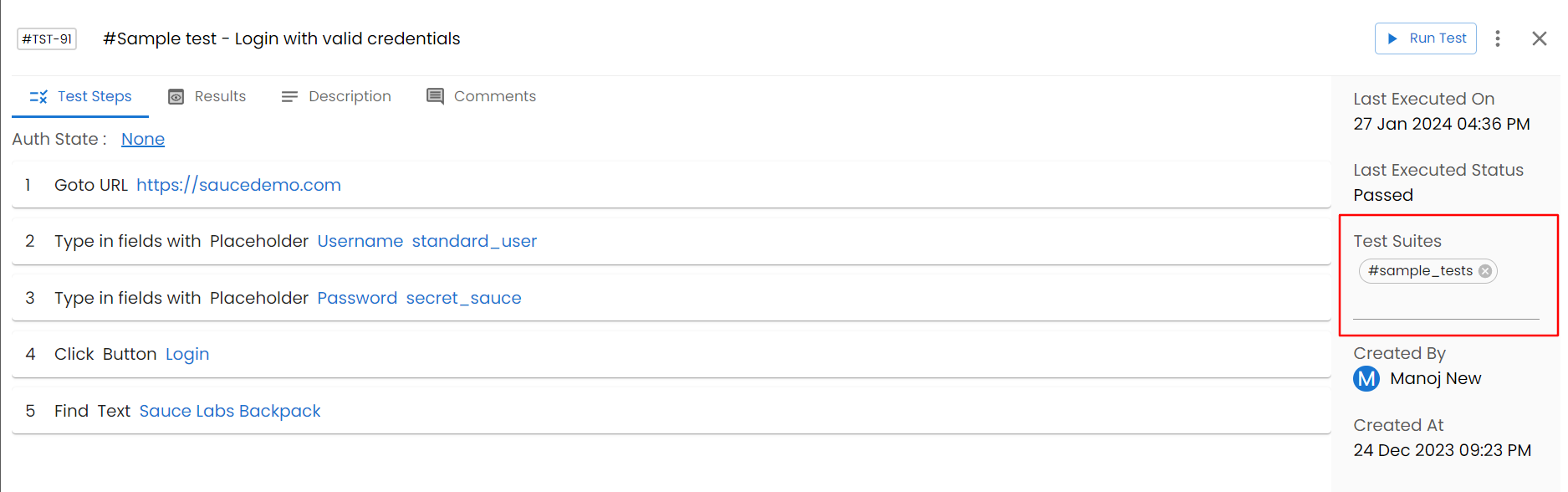
1. Open a test case
2. On the right side panel, Click the test suites field
3. Type the suite name and then select the suite.
associate test case to a test suite
**Note :**
1. You can associate a test case with multiple test suites